Landscape Lighting Design
Spot Lighting by Illuminations Lighting Design
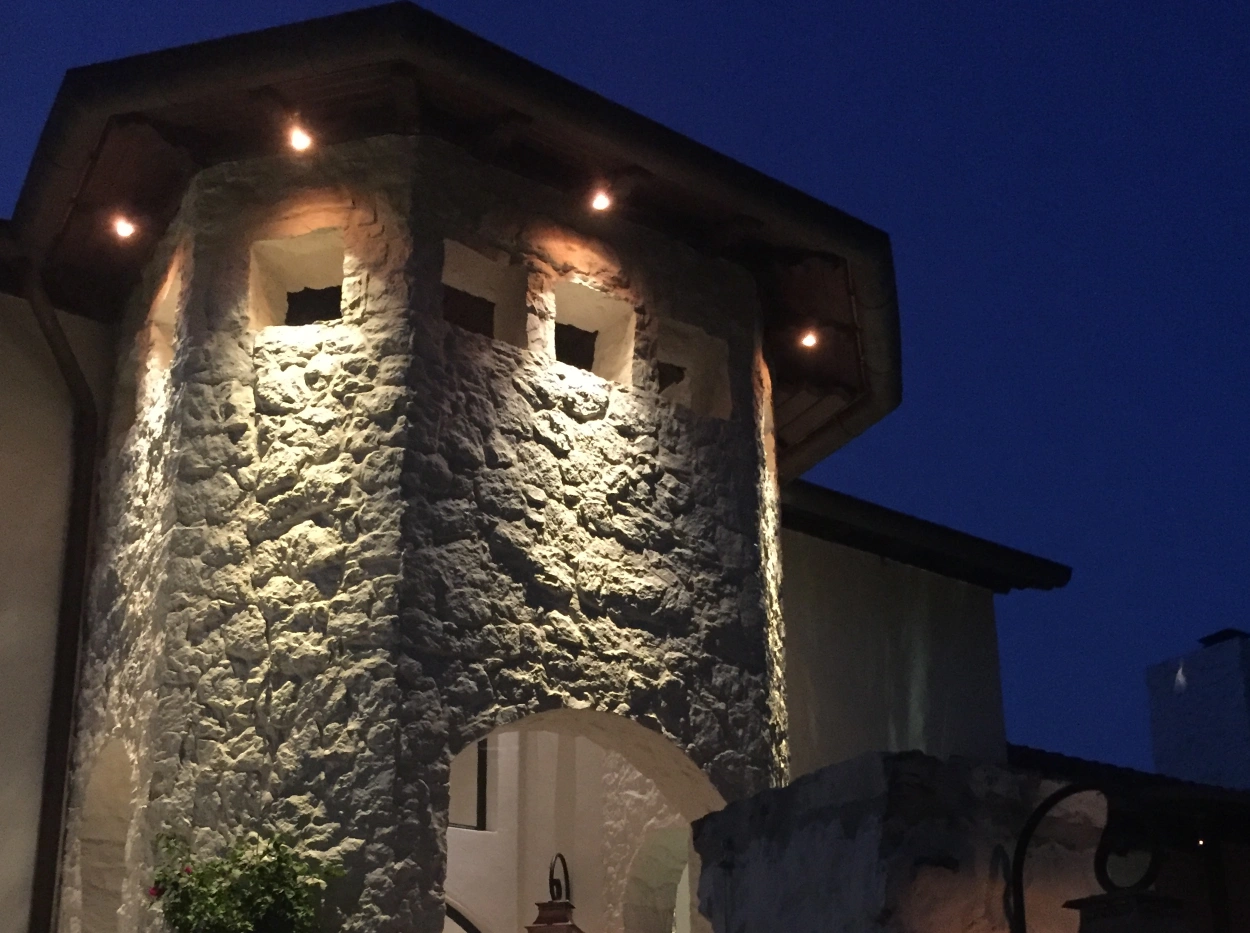
At Illuminations Lighting Design, we install landscape spot lighting systems that highlight architectural features, trees, and focal points throughout a property. Spot lights are one of the most versatile tools in outdoor lighting because they allow us to direct light exactly where it is needed.
Many homes have features that deserve attention after dark. Stonework, columns, large trees, entryways, and garden elements can all become focal points when illuminated correctly. Spot lighting allows us to focus light precisely on those areas while keeping the rest of the landscape balanced.
When designed properly, spot lighting creates contrast and depth across the property rather than simply making everything brighter.

What Spot Lighting Is Used For
Spot lights are directional fixtures designed to focus light on a specific object or area. Unlike pathway lights that spread light across a walkway, spot lights concentrate illumination on a feature we want to highlight.
Spot lighting is commonly used to illuminate:
- Architectural elements of the home
- Stone walls and columns
- Landscape features and sculptures
- Trees and tall shrubs
- Entryways and front facades
- Outdoor living areas
Because the light is focused, spot lights help draw attention to the parts of the property that make the home unique.

Designing Spot Lighting for a Property
The effectiveness of spot lighting depends heavily on fixture placement and beam direction. The goal is to highlight the feature without creating glare or shining light into windows.
When we design spot lighting systems, we evaluate several factors:
- The size and shape of the feature being illuminated
- The distance between the fixture and the target
- The beam spread of the fixture
- The viewing angles from the home and yard
- How the lighting will blend with other landscape lighting
These considerations help us create lighting that feels intentional rather than overpowering.
Beam Angles and Fixture Selection
Spot lights are available with different beam spreads depending on the effect we want to achieve. Narrow beams create a dramatic highlight on a specific feature, while wider beams provide broader illumination across larger surfaces.
Our lighting designers select fixtures based on the application.
Common spot lighting techniques include:
- Narrow beam lighting for tall architectural elements
- Medium beam lighting for trees and landscape features
- Wide beam lighting for walls and large surfaces
Choosing the correct beam angle helps ensure the lighting effect looks natural and balanced.


Low Voltage Spot Lighting Systems
Most spot lighting systems used in residential landscape lighting operate on low voltage power. These systems use a transformer to convert standard household electricity into a lower voltage suitable for outdoor lighting.
Low voltage lighting is ideal for spot lighting because it offers flexibility in fixture placement while remaining energy efficient.
Advantages of low voltage spot lighting include:
- Energy efficient LED fixtures
- Safe operation around landscaping
- Flexible placement across the property
- Expandable lighting systems
Low voltage systems also allow homeowners to add additional lighting later if they decide to expand the system.
Installation by Licensed Electricians
Professional installation ensures spot lighting systems perform reliably in outdoor conditions. Fixtures must be installed securely, wiring must be protected, and transformers must be sized properly.
Our licensed electricians install each system with long-term reliability in mind.
Installation typically includes:
- Running concealed wiring through landscaped areas
- Installing low voltage transformers
- Mounting fixtures in optimal locations
- Aiming lights to highlight specific features
- Adjusting lighting during nighttime testing
Nighttime adjustments allow us to see the final lighting effect and make precise changes to the fixture angles.


Combining Spot Lighting with Other Landscape Lighting
Spot lights are often used alongside other landscape lighting techniques to create a layered lighting design.
Spot lighting commonly works together with:
- Tree uplighting
- Garden lighting
- Pathway lighting
- Moonlighting
- Accent lighting around outdoor living spaces
This layered approach helps the landscape look balanced and visually interesting from multiple viewing angles.
Maintaining Spot Lighting Systems
Outdoor lighting systems require occasional maintenance to keep them operating properly. Over time, landscaping growth or weather exposure may require adjustments to the fixtures.
Maintenance services may include:
- Cleaning fixtures and lenses
- Adjusting fixture angles
- Inspecting wiring connections
- Replacing worn lighting components
- Checking transformer performance
Regular maintenance helps ensure the lighting continues to perform as intended.
FAQ
A spotlight produces a focused beam that highlights a specific feature, while a floodlight spreads light over a wider area.
Spot lights are typically placed near architectural features, trees, landscape elements, and entryways where focused lighting will create visual interest.
Yes. Most modern spot lighting fixtures use LED technology because it provides long life, consistent brightness, and energy efficiency.
In many cases it can. If the existing transformer and wiring have sufficient capacity, additional spot lights can often be integrated into the system.
Outdoor lighting systems benefit from occasional maintenance to clean fixtures, adjust angles, and inspect electrical components.