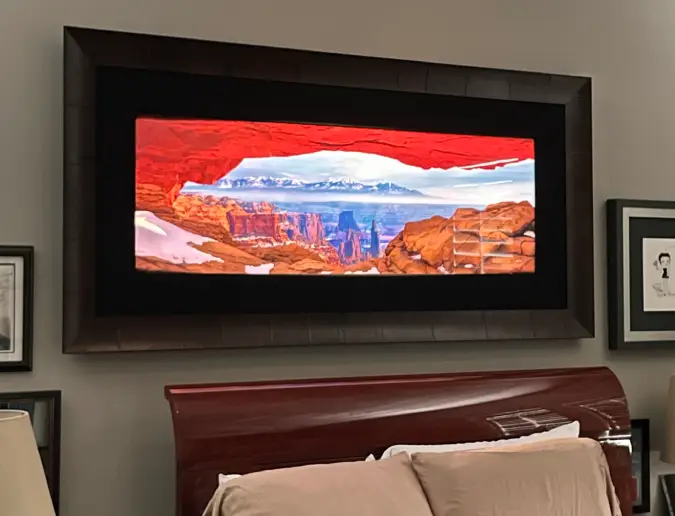
Fine art lighting is something we’ve specialized in for decades, and we’ve worked with Houston homeowners who have some pretty impressive collections. We’ve installed lighting for paintings, sculptures, and individual pieces that deserve more attention than the room’s regular lighting can provide.
Sometimes we’re brought in when a home is being built or remodeled. Other times, someone has purchased a painting, moved into a new house, or rearranged a collection and realized the existing lighting isn’t doing the artwork any favors.
At Illuminations Lighting Design, we design and install lighting specifically for artwork. We work with private collectors, interior designers, architects, and homeowners who want their art displayed properly.
There are quite a few things we consider before recommending a fixture. The size of the artwork, where it’s displayed, the ceiling height, and even the surface of the painting can affect how we light it.
We’ve been providing specialized art lighting in Houston since 1985. After that many years, we’ve learned that some of the smallest adjustments can make a considerable difference in how a piece looks.
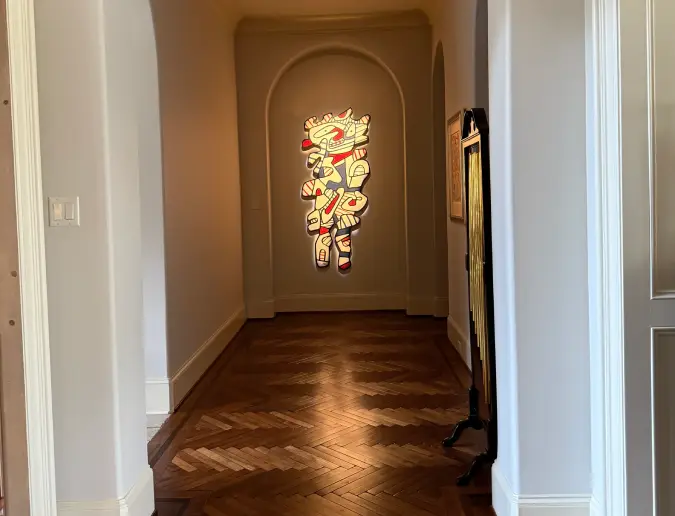
We Look at the Artwork Before Choosing the Lighting
One of the first things we want to see is the artwork itself.
A large oil painting with a textured surface needs a different approach than a framed photograph behind glass. Sculptures present their own challenges, especially when the artist has used different materials or unusual shapes.
We look at the size of the piece, its surface, and where it’s going to be displayed.
For example, a painting with a glossy finish can reflect light directly toward someone standing in front of it. If the fixture is positioned incorrectly, the glare can make part of the image difficult to see.
We’ve also seen artwork illuminated by recessed ceiling lights that were originally installed to brighten the room. Those fixtures may provide plenty of light, but they aren’t necessarily aimed or positioned for the painting.
When we’re planning the lighting, we’ll look at how the artwork is viewed throughout the room.
A painting in a hallway is usually seen from a different angle than one hanging over a fireplace. A large piece in a living room may be visible from several seating areas.
We take those views into account before deciding where the fixtures should go.
Our goal is to make the artwork look as good as it can without having a bright light competing for attention.
Recessed Art Lighting Takes More Planning Than Most People Expect
We install quite a bit of recessed lighting for artwork.
It’s a popular choice because the fixtures can be relatively discreet, particularly in homes with clean ceilings and contemporary interiors.
But there’s more to it than putting a spotlight above a painting.
The position of the fixture matters. So does the angle of the light and the distance between the ceiling and the artwork.
A fixture that’s too close to the wall may light the upper part of a painting more strongly than the lower part. If it’s too far away or aimed incorrectly, it can create glare or spill light into areas where it isn’t wanted.
We work through those details when laying out the lighting.
Adjustable recessed fixtures give us some flexibility because we can direct the light toward the artwork rather than relying on a fixed beam.
We also select the beam spread based on the size of the piece. A narrow beam may work well for a smaller painting, while a larger canvas can require a wider distribution or more than one fixture.
There are times when a single light works beautifully. Other installations need several fixtures to get the coverage right.
We’ll make that recommendation after looking at the artwork and the room.
We Can Often Improve Art Lighting Without Major Changes to the Ceiling
One concern we hear from homeowners is how much work will be involved in adding the lighting.
They may have finished ceilings, decorative details, or a room that’s already furnished. The last thing they want is a major renovation just to install a few lights.
We’ve handled installations where the electrical layout was more complicated than the homeowner expected.
Bryn Larsen shared an experience with us after moving into a builder’s spec home. She wanted better lighting for her art collection and more control over the existing ceiling lights.
During construction, she had been told that certain changes couldn’t be made without opening the ceiling and creating a substantial expense. She was understandably reluctant to deal with that.
When our team evaluated the lighting, we found a way to make the changes without the ceiling repairs she’d been expecting.
We installed adjustable lighting for her artwork and improved the lighting controls throughout the house.
She was pleased with the finished work, especially because the installation was completed without the disruption she’d been warned about.
Not every house allows that approach. Sometimes access or wiring conditions make additional work necessary.
But that’s why we inspect the existing electrical system before deciding how an art lighting installation needs to be handled.
We’ve been doing residential electrical work for decades, and that experience gives us options when working in finished homes.
The Color of the Light Matters With Fine Art
Paintings can look quite different under different types of light.
If you’ve ever moved a painting from one room to another, you may have noticed that the colors look warmer, cooler, or less vivid.
Part of that comes from the lighting.
We pay attention to color temperature and color rendering when selecting fixtures for artwork.
Color temperature affects whether the light appears warm or cool. Color rendering describes how accurately a light source shows the colors of the objects it illuminates.
For fine art, we generally recommend high-quality light sources with strong color rendering. We want the colors in the painting to appear natural and consistent.
We also consider the type of artwork.
An oil painting with heavy texture can look very different under directional lighting than a smooth photograph. Certain lighting angles bring out the raised brushwork, while others may create unwanted reflections.
We adjust the lighting to suit the piece.
There are also conservation concerns, particularly with older or sensitive artwork.
Excessive light exposure can damage some materials over time. We consider the light level, exposure, and characteristics of the fixtures when recommending equipment for valuable or delicate pieces.
Not every collection has the same requirements. We’ll discuss those considerations when we’re planning the installation.
Sculpture Lighting Is a Different Kind of Job
Sculptures give us a lot to work with because the piece has depth and can be viewed from several directions.
A sculpture might be displayed in a recessed niche, on a pedestal, or in the middle of a room. Some are placed outdoors or in large entrance halls.
The lighting has to account for the shape of the piece and where people will be standing when they look at it.
We’ve worked with sculpture lighting where a single fixture would have created heavy shadows or left important details difficult to see.
In those situations, we may recommend lighting from more than one direction.
That doesn’t mean every sculpture needs several lights. Sometimes a carefully placed fixture produces the shadows and depth we’re looking for.
We also consider the material.
Bronze, polished metal, stone, and glass all respond differently to light. Highly reflective surfaces can create bright spots, while darker materials may need a different lighting arrangement to show their detail.
We look at the actual piece before choosing the equipment.
For larger installations, we can also use lighting calculations and modeling to evaluate different fixture arrangements.
Our work has included lighting for private collections and public art, so we’re comfortable handling projects that require more planning than a typical residential lighting installation.
We Also Design Lighting for Display Cabinets and Collections
Not every collection hangs on the wall.
We’ve installed lighting for display cabinets, shelving, collectibles, and other objects that homeowners want to show properly.
Cabinet lighting presents its own set of issues.
The fixtures need to fit within the cabinet or shelving system, provide appropriate light, and remain as unobtrusive as possible.
Glass doors and reflective shelves can complicate the design because they may reflect the fixtures or create glare.
We look at how the cabinet is built and what will be displayed inside it.
In some installations, we recommend concealed linear lighting. Other displays may benefit from small adjustable fixtures that concentrate light on individual objects.
We have experience with Phantom Lighting systems, including equipment designed for cabinets and shelving.
Those products can be particularly useful when homeowners want the lighting equipment hidden from normal view.
We work with the available cabinet space and the electrical requirements to determine what can be installed.
And when the collection changes, adjustable lighting can give the homeowner some flexibility without having to rebuild the entire display.
Our Customers Notice the Difference in Their Artwork
One of the things we enjoy about art lighting is seeing how people react when the finished lighting is turned on.
Debbie Gary hired us to install recessed ceiling lights for paintings displayed throughout her home.
After the installation, she told us how much she enjoyed looking at the artwork with the new lighting. She also mentioned that our electricians were efficient, cooperative, and kept the work area tidy.
We appreciate hearing those things because the installation experience matters, particularly when we’re working in a furnished home with valuable artwork.
Another customer, Neice Lang, brought us in to improve the lighting in a study with dark wood finishes and limited existing light.
The room needed several things. We installed additional ceiling lights to highlight the artwork, added lighting for the desk, and improved the illumination around the bookshelves.
Neice was very pleased with the finished room. She also mentioned that we’d done similar work in the living area of a previous home.
We like projects like that because we’re able to look at the room as a whole.
The artwork needs its own lighting, but the room still has to function for reading, working, and everyday use.
We can address those requirements together rather than treating each light fixture as a separate project.
We Handle the Design and Electrical Installation
Art lighting requires both an understanding of lighting and the ability to install it properly.
We’re a licensed electrical contractor, so our work doesn’t stop after the design is finished.
Our team selects the equipment, plans the fixture locations, and handles the electrical installation.
That’s especially useful in older homes or finished spaces where the existing wiring may not be arranged for the lighting the homeowner wants.
Sometimes we’re working with a room that already has recessed lighting but needs better fixture placement or control. In other cases, we’re adding lighting where none existed before.
We’ll evaluate the electrical system and determine what’s involved.
We also work with interior designers and architects who have specific ideas about how the artwork should be displayed.
We’re comfortable discussing those details and recommending fixtures that work with the overall design.
Once the equipment is installed, we adjust the lighting and check how it falls on the artwork.
A small change in the fixture angle can make a noticeable difference, particularly on paintings with reflective surfaces.
We take care of those adjustments before considering the work finished.
Questions About Our Fine Art Lighting Services
Can you add recessed art lighting to an existing home?
Yes. We install recessed art lighting in both new and existing homes. We’ll look at the ceiling construction, existing wiring, and artwork locations to determine how the installation can be completed.
Can you install lighting for an entire art collection?
Yes. We work with private collectors, interior designers, and homeowners who have multiple pieces displayed throughout a property. We can develop lighting for individual rooms or larger collections.
Do you provide lighting for sculptures and display cabinets?
Yes. Our art lighting services include sculptures, display cabinets, shelving, and other collections. We select the lighting based on the objects, available space, and viewing conditions.
Can you work with our interior designer?
Absolutely. We regularly work with interior designers and architects. We can review the design plans, recommend appropriate lighting equipment, and handle the installation.
Let’s Take a Look at Your Artwork
If you have paintings, sculptures, or a collection that needs better lighting, we’d be happy to discuss the project.
We’ll look at the artwork, the room, and the existing electrical setup. Then we can recommend the fixtures and installation work that make sense for the space.
We’ve been designing and installing fine art lighting in Houston for decades, and we enjoy working with homeowners who care about how their collections are displayed.
Call Illuminations Lighting Design at 713-863-1133 to schedule a fine art lighting consultation.