
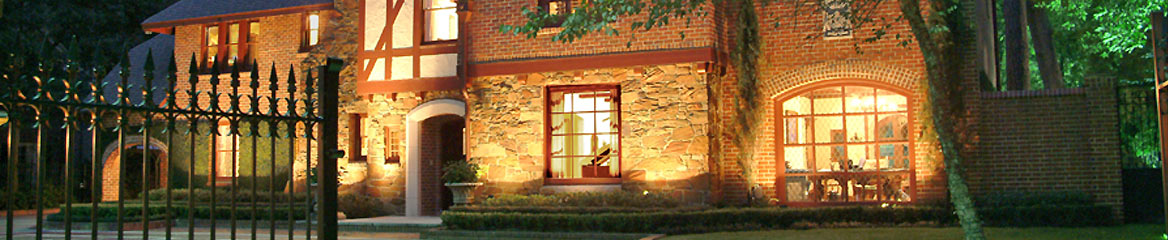
Landscape Lighting Tips From Illuminations Lighting Design
In Houston’s unique climate, landscape lighting isn’t just decorative—it’s essential for showcasing your property while withstanding our challenging weather conditions. We’ve learned that thoughtful illumination transforms ordinary landscapes into extraordinary outdoor experiences, even after sunset. The right lighting strategy can highlight architectural features, guarantee safety, and create inviting spaces for year-round enjoyment. Let’s explore how proper lighting techniques can enhance your Houston home’s curb appeal and functionality throughout our humid subtropical seasons.

Key Points
- Choose fixtures with IP65+ ratings and marine-grade finishes to withstand Houston’s humidity, heat, and potential salt air exposure.
- Layer ambient, task, and accent lighting at varying heights to create depth and three-dimensional visual interest across your property.
- Highlight architectural features using uplighting for drama and downlighting for subtle, moonlight-like illumination.
- Space path lights 15-20 feet apart and position uplights at 45-degree angles to minimize glare and prevent the “runway effect.”
- Select energy-efficient LED lighting with warm tones (2700-3000K) that reduces electricity consumption while withstanding intense summer heat.
Understanding Houston’s Climate Challenges for Outdoor Lighting
The unique climate conditions in Houston present significant challenges for outdoor lighting installations.
We’re faced with high humidity, intense summer heat, and occasional flooding that can impact lighting system durability and performance.
We recommend selecting fixtures with IP65 ratings or higher to withstand our heavy rainfall and humidity.
Marine-grade finishes resist corrosion from salt air that affects coastal properties.
Heat-resistant components are essential as summer temperatures regularly exceed 90°F, potentially shortening bulb lifespan.
For flood-prone areas, we install elevated junction boxes and sealed connections to prevent water intrusion.
LED systems offer the best resilience against our climate extremes while proper voltage regulation protects against power fluctuations during our frequent thunderstorms.
Energy-efficient fixtures allow your lights to operate all night without excessive utility costs, a crucial consideration in Houston’s year-round outdoor living environment.
Layer Your Lighting for Depth and Dimension
Beyond selecting weather-resistant fixtures for Houston’s challenging climate, proper lighting arrangement creates visual impact that transforms ordinary landscapes into extraordinary outdoor spaces.
We recommend implementing three key lighting layers: ambient, task, and accent lighting. Start with ambient illumination as your foundation—path lights and subtle washes that provide overall visibility.
Effective landscape lighting requires a strategic foundation of ambient illumination before adding specialized layers for function and focus.
Next, add task lighting to functional areas like outdoor kitchens, stairs, and entryways where safety is paramount. Finally, incorporate accent lighting to highlight architectural features, specimen plants, and water elements.
This layered approach creates depth by allowing the eye to travel across different lighting zones. When we combine various lighting heights—ground-level path lights, mid-level shrub lighting, and downlighting from trees—we create a three-dimensional effect that showcases your property’s best features. Modern LED landscape lighting offers bright illumination while using up to 85% less energy than traditional options.
Highlighting Architectural Features and Focal Points
When highlighting architectural features and focal points, we’ll need to weigh the pros and cons of strategic fixture placement to properly showcase your home’s distinctive elements.
Up-lighting creates dramatic shadows and emphasizes height, while down-lighting offers a more subtle, natural illumination that mimics moonlight. Selecting the right color temperature—from warm (2700K) for traditional structures to cooler tones (3000-4000K) for contemporary designs—ensures your architectural highlights and garden focal points appear as intended. With over 25 years of experience lighting Houston’s diverse landscape features, Illuminations Lighting Design can help transform your outdoor space into a stunning nighttime display.
Strategic Fixture Placement
Carefully selecting fixture placement transforms ordinary landscapes into enchanting nighttime environments. When positioning lights, we consider both aesthetic appeal and practical function.
Install path lights 15-20 feet apart to guide movement without creating a “runway effect.” For trees, place uplights at the base, angled slightly outward to capture the full structure and create dramatic shadows.
Mount wall lights 5-7 feet high for ideal coverage, and position spotlights at 45-degree angles to minimize harsh glare. For water features, submerge fixtures or position them beneath the waterline to create rippling effects.
Remember to conceal wiring and fixtures when possible—the effect should be visible, not the source.
In Houston’s humid climate, we recommend elevating ground fixtures slightly to prevent water damage during heavy rains and periodic garden maintenance.
Up-Lighting Versus Down-Lighting
Understanding the fundamental difference between up-lighting and down-lighting techniques allows homeowners to dramatically enhance their property’s architectural features.
Up-lighting creates drama by positioning fixtures at ground level to cast light upward, perfect for highlighting textured walls, columns, and tree canopies.
Down-lighting mimics natural moonlight, creating gentle washes of illumination from above.
We recommend selecting techniques based on your property’s unique elements:
- Up-light tall structures and mature trees to showcase their impressive height and texture
- Down-light pathways and garden beds to improve safety while creating subtle beauty
- Combine both techniques around focal points like water features for dimensional depth
When properly executed, these complementary lighting methods work together to create a cohesive nighttime landscape that emphasizes your home’s best architectural elements while providing functional illumination throughout your outdoor spaces.
Color Temperature Selection
Choosing the right color temperature stands as one of the most critical decisions in landscape lighting design, as it dramatically affects how architectural features and focal points appear at night.
We typically recommend 2700K-3000K warm white lighting for Houston homes as it creates an inviting atmosphere while accurately rendering textures and colors.
For modern architectural elements, consider 3500K-4000K neutral white lighting to accentuate clean lines and contemporary materials.
When highlighting water features, cooler temperatures (4000K) enhance the blue tones, while warmer lights (2700K) complement stonework and wooden structures.
For plant material, we’ve found that 3000K strikes the perfect balance—revealing natural colors without washing them out.
Remember that consistent temperature throughout your system creates a cohesive look that’ll impress guests and enhance your property’s nighttime appeal.
Strategic Path and Driveway Illumination
When properly designed, path and driveway illumination serves both practical safety functions and aesthetic enhancement of your property.
Thoughtful pathway lighting transforms necessary safety features into elegant design elements that welcome guests while showcasing your landscape.
We recommend installing fixtures at consistent intervals to create a visual rhythm that guides visitors to your entrance while highlighting the architectural features of your landscape.
- Use low-voltage LED path lights positioned 6-8 feet apart to provide adequate illumination without creating harsh pools of light or dark gaps
- Install recessed lights along driveway edges rather than centered fixtures that may be damaged by vehicles or snow removal equipment
- Consider photocell or motion-activated technologies to guarantee your pathways illuminate automatically when needed, conserving energy while maintaining security
For optimal results, consult with lighting design professionals who can manipulate light to create your desired effects while ensuring proper fixture placement.
Creating Ambiance in Outdoor Living Spaces
When creating ambiance in outdoor living spaces, we’ll focus on strategic fixture placement to highlight architectural features and define functional zones.
We can achieve depth and visual interest by layering light effects, combining uplighting on trees with downlighting from structures and ambient path lighting.
This multi-dimensional approach creates a cohesive atmosphere that transforms outdoor areas into inviting extensions of your home. Professional lighting consultants with expertise in art and design can help ensure fixtures are properly positioned for maximum impact while maintaining the natural beauty of your landscape.
Strategic Fixture Placement
The strategic placement of lighting fixtures serves as the foundation for creating enchanting outdoor living spaces with depth and character.
We’ve found that properly positioned lights can transform your Houston landscape from ordinary to extraordinary by highlighting architectural features and ensuring safe navigation throughout your property.
When planning your fixture layout, consider these proven techniques:
- Position uplights at the base of trees or columns to create dramatic shadows and vertical dimension
- Install path lights 6-8 feet apart to provide continuous illumination without creating a “runway” effect
- Mount downlights in trees to simulate natural moonlight, casting gentle shadows across gathering areas
Layering Light Effects
Proper placement provides the foundation, but mastering the art of layering light effects elevates your outdoor design from functional to extraordinary. We recommend combining three essential lighting layers: ambient, task, and accent lighting.
Ambient lighting provides overall illumination through soft, diffused sources like post lights or downlights nestled in trees. Task lighting focuses on specific areas where activities occur—patios, cooking spaces, and walkways—ensuring functionality and safety.
For that sophisticated Houston flair, add accent lighting to highlight architectural features, specimen plants, or water features.
We’ve found that combining warm and cool tones creates depth, while varying the intensity between layers produces visual interest.
The secret to successful layering? Subtlety.
Your lighting should guide the eye naturally through your landscape, creating a cohesive experience that feels intentional yet effortless.
Selecting Weather-Resistant Fixtures for Gulf Coast Conditions
Selecting durable fixtures designed specifically for Gulf Coast conditions is critical when planning your landscape lighting system. Houston’s combination of humidity, salt air, and intense heat demands materials that won’t corrode or deteriorate prematurely.
We recommend investing in marine-grade fixtures that withstand our challenging environment.
For peak performance in our coastal climate, consider these specifications:
- Brass, copper, or 316-grade stainless steel housings that resist rust and corrosion even with salt exposure
- Fixtures with IP67 or higher ratings to guarantee complete protection against water intrusion during heavy rains
- UV-resistant lenses and components that won’t yellow or crack under our intense summer sun
These weather-resistant features may increase your initial investment, but they’ll substantially reduce maintenance costs and extend your system’s lifespan in our unique Gulf Coast conditions.
The right outdoor lighting not only withstands Houston’s climate but also significantly enhances property value while highlighting your home’s architectural features.
Energy-Efficient LED Solutions for Year-Round Usage
Modern LED technology has revolutionized landscape lighting for Houston homeowners seeking both beauty and efficiency. We recommendK-3000K warm white LEDs that mimic traditional incandescent glow while consuming up to 80% less electricity—crucial for systems operating 4,000+ hours annually.
LEDs offer unmatched value with 50,000+ hour lifespans, eliminating frequent bulb replacements common with halogen systems. They’re also ideal for Houston’s climate, operating efficiently in our summer heat unlike traditional bulbs that deteriorate in high temperatures.
Consider integrated dimmers and timers for your LED system to further reduce consumption. Smart controllers allow programming seasonal lighting adjustments through smartphone apps, ensuring ideal illumination throughout the year. For maximum efficiency, pair your LED system with photovoltaic cells that harness our abundant Gulf Coast sunshine. Unlike traditional lighting options, LED lights produce minimal heat output, making them safer to touch and significantly reducing cooling costs during Houston’s sweltering summers.
Professional Installation vs. DIY Approaches
While homeowners may find DIY landscape lighting kits appealing for their lower upfront costs, professional installation offers significant advantages for complex or extensive systems.
We’ve seen many Houston clients struggle with placement, wiring, and troubleshooting when they attempt installation themselves. Professional installers bring expertise in voltage drop calculations, fixture selection, and ideal placement techniques.
Consider these factors when deciding between DIY and professional installation:
- Professional installers can create custom lighting plans that account for Houston’s unique climate conditions and vegetation
- DIY projects often require more maintenance and replacements due to improper waterproofing or insufficient protection
- The cost difference narrows when accounting for DIY mistakes, system repairs, and the value of your time
For medium to large properties, we recommend consulting with a professional for at least the initial design phase.
Professional lighting contractors have access to commercial-grade materials that offer superior durability and performance in Houston’s varying weather conditions.
Frequently Asked Questions
How Often Should I Replace Landscape Lighting Bulbs?
We typically recommend replacing landscape lighting bulbs every 1-2 years for halogen and 5-10 years for LED options, depending on usage patterns and manufacturer specifications for ideal performance.
Can Landscape Lighting Increase My Property Value?
Yes, we’ve found landscape lighting increases property value by enhancing curb appeal, security, and usability. It’s an investment that typically yields 50-150% ROI when professionally installed with quality fixtures.
What Permits Are Required for Landscape Lighting in Houston?
In Houston, we’re typically required to obtain electrical permits for landscape lighting installations that involve new wiring. We’ll need to contact the city’s permitting department or consult a licensed electrician for specific requirements.
How Do I Prevent Bugs From Gathering Around Outdoor Lights?
We recommend using yellow or amber LED bulbs which attract fewer insects. Position lights downward, away from your home, and consider motion-activated fixtures. Regular maintenance keeps bugs from nesting in fixtures too.
Are Solar-Powered Landscape Lights Effective in Partially Shaded Areas?
Solar-powered lights in partial shade perform sub-optimally. We recommend placing solar panels in direct sunlight or choosing premium models with remote panels that can be positioned in sunnier spots for effective illumination.
Takeaway
We’ve explored essential strategies for illuminating your Houston property effectively. By layering your lighting approach, selecting appropriate weather-resistant fixtures, and highlighting key landscape features, you’ll create a stunning outdoor environment that withstands Gulf Coast weather challenges. Whether you choose professional installation or DIY methods, remember that properly designed landscape lighting enhances security, showcases your home’s character, and extends your living space into the evening hours.

Follow Us: