
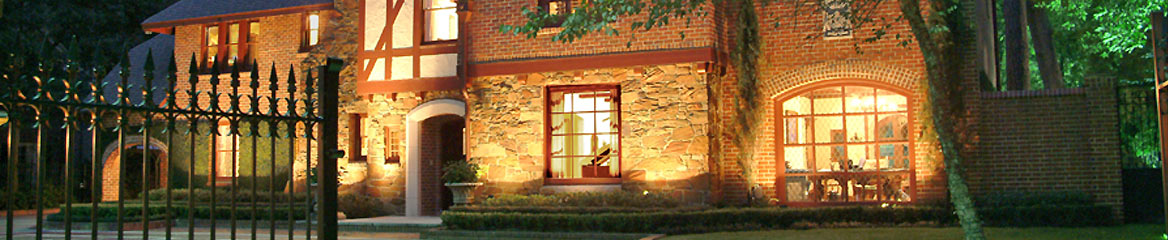

Art Lighting
Fine paintings are used as ornate decorations in custom homes and in offices. This is not surprising when you stop to realize has been with in one form or fashion for at least 40,000 years. Light in a paintings itself contributes to the tone of the work by creating a sense of depth through the interplay of light and shadows. Lighting for paintings should not cast shadows, however, but rather must
Read more
Fine Art Lighting
Art is art is art is art…
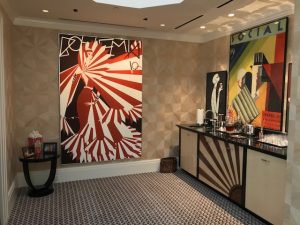
In all its forms, art enhances our lives
There’s a very old expression which goes Ars est celare artem, or in English, “True Art conceals the means by which it is achieved.” We’ve always taken that to heart, right from the very beginning.
Our company began with a chance meeting of an electrical engineer and a fantastic art lighting director from the theater. They felt that they needed to combine their talents,
Read more
The Secret to Art Lighting
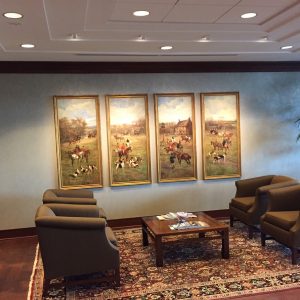
From Hot to Cool
Hot Lights
Back in the olden days art lighting was accomplished with incandescent bulbs because all other bulbs were inadequate for the task. Fluorescent lights, although long lasting, had a very limited spectrum, and they tended to dim and change color over their lifetime. Plasma discharge bulbs, such as neon, were monochromatic, so also completely useless.
So we worked with incandescent
Read more
What our customers are saying:
Neatness Counts!
Sometimes our family members can drive us crazy. Maybe the kids ran into the house, directly from the garden, and tracked globs of mud all over the kitchen. Maybe our spouse who just fixed our car, but wiped poorly-washed hands on our new towels. We are quick to reassure our clumsy guest who spilled a glass of red wine because they are, after all, our friend.
We teach our children to be
Read more
What Our Customers are Saying:

"A testament to unique solutions
Our customers love us…and believe us, the feeling is mutual! Without you we wouldn’t have stayed in business for nearly 40 years… We couldn’t be more delighted than when our clients sing our praises!
John Malone very kindly dropped us a note, and said:
"I just got home and saw what y’all did. It wasn’t what I expected however! I didn’t know that you could do what you did,
Read more
Direct, Phantom, or Remote?
What is the best way to light your art?
Elongated filament tube-bulbs, often greater than 6” in length, used to be the “go to” choice for lighting paintings, or other relatively flat objects (like plaster of stone friezes). With paintings there would often be a fixture with one or two bulbs directly overhead. This was called Direct Lighting, which would illuminate a rather central splotch, often leaving the top
Read more
Art Lighting, Repairs, and Maintenance

It’s a complex skillset
Some folks might think that "art lighting" is easy— clamp an elongated tube-style incandescent fixture to the top of a picture frame, and you're done, right? Sadly, no; that went out of fashion years ago, right along with button-up shoes.
The technology has advanced from the power-hungry, short-lived incandescents invented in the 1890s, to durable sources that use 1/10th the power, and
Read more
Neatness Counts

No mess… and we vacuum, too!
Back in your school days, on top of the requirements for a test or quiz, your teachers would often add “…and Neatness Counts”. At the time we might have regarded that as unfair since knowing the answers might have seemed hard enough. The teachers, however, were preparing us for Real Life, because neatness really does count.
Just like Home
It’s true that we know all our fixtures
Read more
Seen in the Right Light
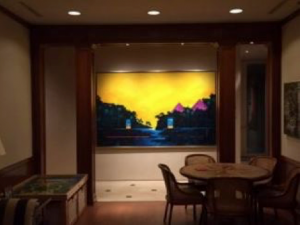
The Spectrum Your Art Needs
Salvador Dali’s paintings would not be best viewed by candlelight. A Cézanne would be ill-served by the harsh actinic radiation from a halogen bulb. Edvard Munch’s “The Scream” might look extra-creepy in a yellowish-orangey sodium vapor light, but is that what you want? We probably all agree that we should stick with the artist’s original vision.
The Future Lights the Past
There are
Read more
Beauty in the Eye of the Beholder

But first they must be able to see it!
If your selected art-lighting team doesn’t own and use a light meter, they are unqualified! If they don’t bring test equipment and rigs to put temporary lighting in place so they can check the values, effects, and appearances, they (quite frankly) don’t know what they are doing.
Each canvas, statue, or subject in any medium, has distinct needs to optimize its appearance.
Read more

Follow Us: